
Morning Wave
A 30-second voice note before he rolls. "Coffee is on, drive safe, talk tonight." It costs nothing and starts both your days with a hand on the other shoulder, even from 1,400 miles away.
Two to three weeks apart is the OTR norm. The video call rhythm, daily check-ins, and home-time habits real couples use to keep love alive across 2,000 miles - written with the empathy this lifestyle actually requires.
Over-the-road drivers are away from home two to three weeks at a stretch, often seeing their partner only once every three to four months in the heaviest seasons. A ten-hour driving day leaves little room for real conversation, and cell coverage through rural Idaho or western Nebraska can delay a text by three days. Long-haul relationship dating is therefore a form of long-distance dating with irregular reunions - and it works best when both people are independent before they ever met. The couples who thrive build three things: a predictable video-call rhythm after the truck parks, honest sharing of the route and dispatch schedule, and protected home-time rituals that do not collapse under the weight of missed birthdays.
Below is the practical playbook - the habits, tools, and quiet emotional choices that turn two weeks of distance into a relationship that lasts longer than most couples sitting across the same dinner table every night.
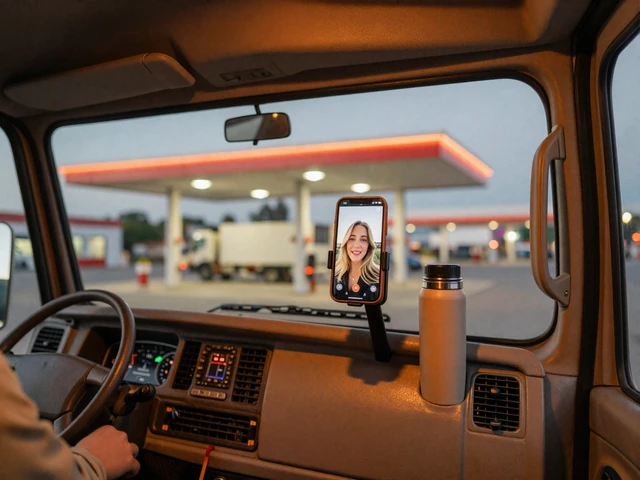
The first rule almost every long-haul couple discovers - usually after a month of frustrating texts - is that face beats phone. Once the truck is parked for the night and the engine is off, a video call on FaceTime, Skype, or WhatsApp does something a phone call cannot: it shows you the cab, the truck-stop neon outside the windshield, the tired half-smile your partner cannot fake on text.
Drivers who put the phone on the dashboard and walk her through what dinner looks like - a microwaved chili, a bag of beef jerky, the view of a Petro lot in Effingham - turn the loneliest part of the job into a shared moment. Couples report "virtual dinners" become one of the most missed rituals on home time.
Schedule one fixed video call per night when it is realistic, and let the casual voice calls fill the gaps. Open lines are the foundation of every healthy long-distance relationship - and the visual layer matters more than most couples expect.
Consistency beats length every single time. A predictable ten-minute call at the same hour - say nine in the evening - outperforms a three-hour Sunday marathon. Separate "connection calls" (feelings, stories, jokes) from "logistics calls" (rent, the leaking faucet, the truck repair invoice). Mixing them is how good nights turn into arguments.
A 30-second voice note before he rolls. "Coffee is on, drive safe, talk tonight." It costs nothing and starts both your days with a hand on the other shoulder, even from 1,400 miles away.
Quick text or voice memo during his fuel stop or your lunch break. Share one specific detail of the day - the dog stole a sock, the sunset over I-80 was unreal. Specifics travel further than "thinking of you."
The anchor of the day. Ten to fifteen minutes once the brakes are set. Emotional check, one concrete story, an "I love you," then a brief logistics handoff. Same time every night, defended like a meeting.
If you can only protect one of these, protect the parked-truck call. It is the moment the day ends together - and the couples who keep it sacred almost always make it past the first year.
Relying on a single channel is how nuance gets lost. Long-haul couples who thrive layer four formats - each one doing a job the others cannot.
"He kept the Post-It I stuck in his lunch the day he left for a 19-day haul. It was still on his sun visor three months later. That is what the road carries." - Maddie, partner of a regional reefer driver, Ohio
For a deeper breakdown of the day-to-day mechanics, our guide to maintaining relationships during long hauls walks through the exact habits couples use month-by-month.

A three-day home visit after fourteen days on the road can be wrecked in one move: filling it with errands, family obligations, and the contractor visit you have been postponing. Drivers come home exhausted. The first 24 hours should be empty on purpose.
What works:
Couples who overschedule home time burn out fast. Couples who guard it learn to make 72 hours feel like a week.
Long-haul partners learn something most couples never have to: the date on the calendar is rarely the date that matters. Anniversaries land mid-Wyoming. Birthdays fall on a Tuesday in Tulsa. The Fourth of July is a load to Reno.
The fix is gentler than it sounds. Plan a real celebration for whatever home time falls closest - a restaurant reservation, a hike at the state park, a concert two weeks out he can actually attend. The anticipation itself becomes a mood-lifter on the road. Knowing there is a candlelit dinner waiting on Saturday makes a hard Wednesday in Tucumcari shorter.
Some couples keep two dates on the wall: the official one (Hallmark agrees) and the real one (the one you actually celebrate). The real one wins every time. After a year of doing this, you stop mourning the calendar and start protecting your floating holidays with the same energy other couples protect Christmas morning.
The deeper truth: scarcity makes time together louder. A couple that sees each other 80 days a year often treats those 80 days with more presence than couples who share a roof every night and barely look up from their phones.
The questions long-haul partners actually search for - answered honestly.
Long-distance dating with a truck driver is hard in specific, predictable ways: missed holidays, schedule unpredictability from dispatch and weather, and stretches of unreliable cell coverage in rural areas where messages can lag by days. The couples who make it work share three traits - independence before the relationship, a predictable nightly video-call rhythm once the truck parks, and the emotional flexibility to celebrate birthdays and anniversaries whenever home time actually lands. Most partners report the rhythm clicks at the three-month mark.
Truck drivers respond to honesty about the lifestyle, independence in a partner, and platforms where they do not have to explain their schedule. A profile that names exactly what you are comfortable with - long stretches apart, asynchronous communication, weekend or biweekly home time - outperforms generic dating-app copy. Niche platforms like DatingLawn show your profile to verified drivers actively looking for someone who understands the route, instead of penalizing you for being 800 miles away.
Build a predictable communication stack: voice notes through the day for stories and check-ins, a scheduled video call once the truck parks for the night, and texts only for short logistics. Add slower channels - handwritten notes, care packages routed to a terminal he hits next week, shared playlists - for the deeper layer. Consistency matters more than length: a ten-minute parked-truck call every night beats a sporadic two-hour Sunday marathon.
OTR (over-the-road) drivers typically come home 2-4 days every two to three weeks. Regional drivers are home most weekends, with four to five nights out per week. Local drivers come home every night but work 10-14 hour days. The exact pattern depends on the carrier, the freight lane, and seniority. Ask the question early - "OTR, regional, or local?" - because it shapes the entire shape of your relationship.
They can, and many do - but it requires both partners to be independent, communicative, and realistic about the trade-offs. The couples that thrive treat distance as a logistics challenge rather than an emotional wound, protect their home-time rituals, and accept that the calendar will shift around freight schedules. Scarcity, handled well, often produces more presence per hour than couples who share a roof every night. For more practical detail, see our guide on maintaining relationships during long hauls.
Niche, route-aware platforms outperform mainstream apps for long-haul relationship dating. DatingLawn matches members based on overlapping routes and home bases, with verified profiles built around CDL schedules instead of swipes. You can create a free profile in a few minutes, or read our deeper analysis of why truckers struggle with traditional dating apps first.
Three more reads for partners building a relationship across state lines.
 Relationships
Daily check-ins, multi-channel communication, and small gestures from the road. The habits that turn 14 days apart into a stronger relationship.
 Tips
Driver types, schedule reality, and the daily habits that actually make trucker relationships last. Written for partners who want the truth.
 Relationships
OTR vs regional vs local - how schedule type changes everything. Planning home time, working with dispatch, and the income-vs-presence tradeoff.