
OTR (Over-the-Road)
Two to three weeks on the road, then home for 2-4 days. Highest earning potential, hardest on relationships. Expect long stretches without face time and a strong reliance on video calls and voice notes.
Driver types, schedule reality, and the daily habits that actually make trucker relationships last. Written for partners who want the truth - not another recycled top-10 list.
Dating a truck driver starts with one question: what kind of route does he run? The answer changes everything - how often you see him, the income, the holidays, the way you communicate.
Two to three weeks on the road, then home for 2-4 days. Highest earning potential, hardest on relationships. Expect long stretches without face time and a strong reliance on video calls and voice notes.
Home most weekends - typically four to five nights out per week, within a 1,000-mile radius. The middle path: solid income, predictable weekly rhythm, and Saturday mornings together.
Home every night, but the days are long - 10 to 14 hours behind the wheel is normal. Lower mileage pay, but you get a partner who eats dinner at your table. Two days off per week is standard.
Most drivers start OTR to build experience and pay down their CDL training, then move regional or local once they have someone to come home to. If you are dating a younger driver in Texas or any major freight state, expect the OTR phase to last one to three years.
Last-minute schedule changes are not a bug - they are the job. Loads get delayed, the weather closes I-80 through Wyoming, a trailer brake fails in Amarillo, a shipper takes three hours to load a 30-minute pickup. Behind all of it sits a dispatcher whose job is to keep the truck moving and the customer happy. Your partner is the last person in that chain to find out he is now running a 600-mile diversion.
This is the single hardest adjustment for new partners. The 7 p.m. dinner you planned becomes a 11 p.m. voice note from a truck stop in Oklahoma. The Friday home time becomes Sunday. Birthdays land mid-haul.
"After three months I stopped asking 'when will you be home?' and started asking 'what is dispatch saying right now?' That one change saved us." - Renee, partner of an OTR flatbed driver, Georgia
The couples who thrive treat unpredictability as a logistics problem instead of a betrayal. A few habits that work:
Once you accept that the schedule belongs to dispatch, not to you, the resentment evaporates. What is left is two adults solving a moving puzzle together.
Research on driver wellbeing is consistent: drivers with strong home support show better safety records and lower turnover. The habits are simple - the discipline is the hard part.
Most partners report that the rhythm clicks around month three. For more on the communication playbook, read our deep dive on maintaining relationships during long hauls or the broader picture in long-distance relationships with truckers.
Not everyone is built for this lifestyle, and that is fine. The kindest thing you can do - for yourself and the driver - is answer these questions honestly before you are six months in.
You are likely going to do well in this relationship. The lifestyle rewards independent partners with steady emotional anchors - and the home time hits different when you have built a life that does not collapse without him.
That is honest, not failure. Some of these can change with time and conversation; some are fundamental. Have the talk early - before the 14-day trips and missed birthdays do the talking for you.
The questions partners actually ask in the first month - answered straight.
Dating a truck driver is hard in different ways than most relationships. The schedule unpredictability and long absences (especially with OTR drivers, who are out 2-3 weeks at a time) require a partner who is independent, secure, and good with asynchronous communication. The compensations are real too: undivided attention during home time, financial stability from a steady CDL income, and a partner who values your time together precisely because it is rare. Most partners report the rhythm clicks around the three-month mark.
The hardest parts are emotional rather than logistical. Partners describe missing holidays, eating dinner alone, and the anxiety of schedule changes as the biggest challenges. What makes it work is treating the unpredictability as a logistics issue (dispatch decisions, weather, freight delays) rather than a personal slight, and building strong individual routines so your life does not pause when he is on the road. Couples who succeed long-term almost always describe themselves as independent before they were a couple.
It depends entirely on the type of route. OTR drivers are typically home 2-4 days every two to three weeks. Regional drivers come home most weekends, with four to five nights out per week. Local drivers are home every night but work 10-14 hour days. Ask the specific question on date three: "OTR, regional, or local?" The answer shapes the entire relationship.
The communication stack is: voice notes throughout the day (he cannot text while driving), scheduled video calls after he parks for the night, and brief check-ins at fuel stops. Most drivers use FaceTime, WhatsApp voice messages, or Skype. The couples who do best book two or three recurring "parked truck" calls per week and use voice notes for the in-between hours. Texting is for short logistics only - never expect a real conversation while the wheels are rolling.
They float. Successful trucker couples celebrate when home time lands, not when the calendar says. If Thanksgiving is mid-haul, the family dinner moves to the Sunday before he leaves. Pick a "real" date and an "official" date - your real date is the one that matters. Couples who insist on the calendar version of holidays burn out fast; couples who shift gracefully build their own traditions.
Niche dating platforms built for the trucker lifestyle - like DatingLawn - match drivers based on routes and verified profiles instead of static location and swipes. That solves the core problem of mainstream apps, which penalize you for being 800 miles away or slow to reply. If you are starting your search, the homepage is a good place to create a free profile, or read our breakdown of the best dating apps for CDL drivers first.
Three more reads that pair well with this one - whether you are planning home time, working out communication, or weighing whether this is the life for you.
 Relationships
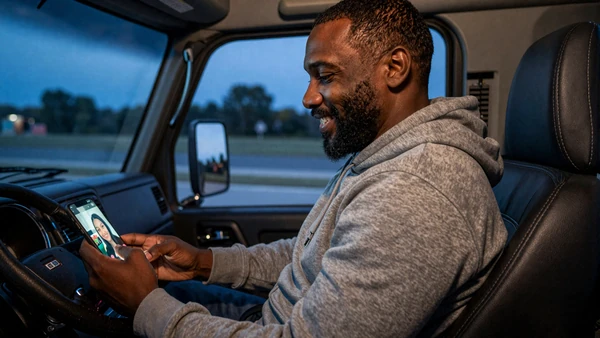
Two to three weeks apart is the OTR norm. The communication playbook real couples use to keep love alive across state lines.
 Relationships
Daily check-ins, multi-channel communication, and small gestures from the road. The habits that turn 14 days apart into a stronger relationship.
 Relationships
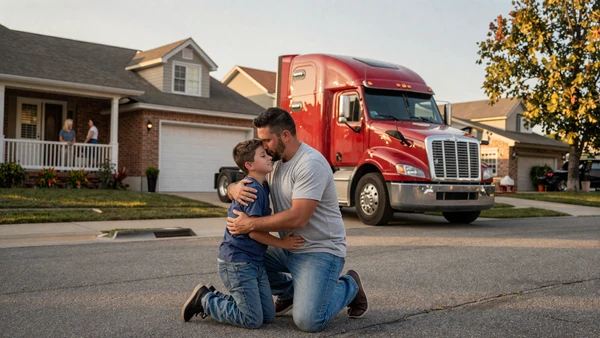
OTR vs regional vs local - how schedule type changes everything. Planning home time, working with dispatch, and the income-vs-presence tradeoff.